STOP Condensation

The problem of induction

When you use it, condensation appears as well

GAS

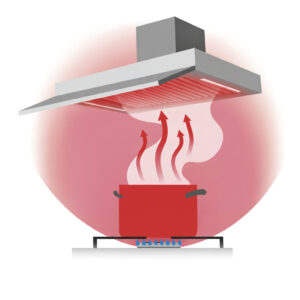
With a gas cooktop, the flame heats not only the cookware but also the surrounding air. The heat naturally rises toward the hood, keeping the lower surfaces at a high temperature.

When cooking vapors reach the hood, they therefore come into contact with surfaces that are already warm. Under these conditions, condensation is virtually absent.

SLIVER con gas copia

INDUCTION

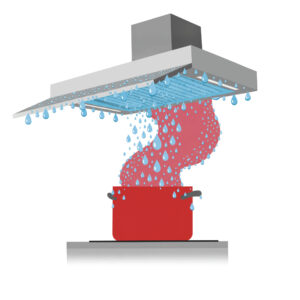
With induction cooktops, something different happens. Induction heats only the cookware containing the food, without warming the surrounding air. As a result, the surfaces of the hood remain cooler.

When the hot, moisture-rich cooking vapors rise toward the hood, they come into contact with colder surfaces. The moisture in the air quickly turns into water droplets. These droplets then fall back onto the cooktop and even onto the food.

This phenomenon is therefore caused exclusively by a simple law of physics: the temperature difference between the hot cooking vapors and the cold surfaces of the hood.

SLIVER con induzione copia

GAS

Heats both cookware and surrounding air

Warm lower surfaces of the hood

No condensation

INDUCTION

Heats only the cookware

Cold lower surfaces of the hood

Formation of water droplets

With the growing spread of induction cooktops in modern kitchens, condensation management has become one of the most important challenges for kitchen hoods.

The Galvamet Solution

Pioneers in Condensation Management

Galvamet was the first company to study and introduce to the market a specific solution designed to eliminate condensation in built-in hoods installed above induction cooktops.

Unlike traditional solutions, which attempt to manage the effects of condensation, Galvamet technology acts directly on the cause of the phenomenon.

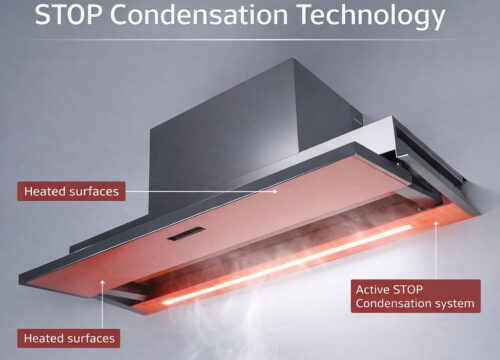
Immediately after switch-on, a dedicated system heats all the lower surfaces of the hood, bringing them to a controlled temperature that prevents the formation of water droplets. In this way, cooking vapors do not come into contact with cold surfaces, and visible condensation does not form.


 
 
ChatGPT Image 20 apr 2026, 11_41_48 copia_en

Controlled Humidity Management

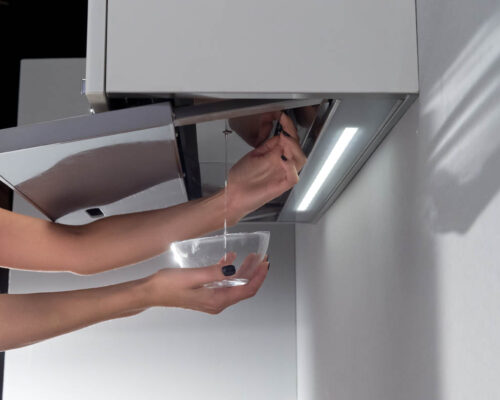
The extracted air, still rich in humidity, is then conveyed inside the hood where it meets dedicated technical surfaces. Here, the moisture is condensed in a controlled manner and collected in an internal tray, remaining completely invisible from the outside.

The tray is equipped with electronic level sensors that continuously monitor the amount of water collected. When the maximum level is reached:

  • the hood motor automatically stops
  • the control LEDs start flashing to signal the condition

Emptying the tray is quick and easy thanks to the dedicated drain valve.

DSC_1655m copia

Tested in Real-Life Conditions

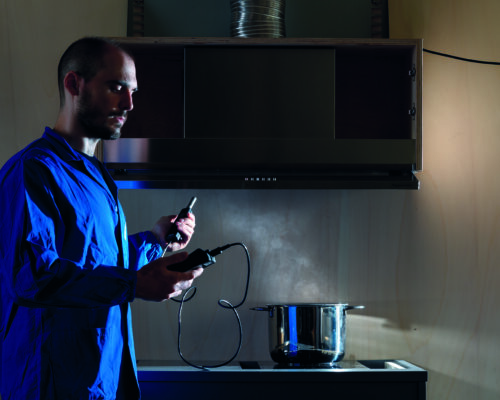
Galvamet models were tested in Galvamet laboratories under normal operating conditions. Under the same conditions, the main anti-condensation systems currently available on the market were also tested.

After 30 minutes of continuous operation, the Galvamet models proved to be the only ones capable of completely preventing the formation of droplets on all lower surfaces, avoiding any dripping onto the cooktop below.

RICERCA_SVILUPPO copia

TRADITIONAL SYSTEM

Baffle grease filters

Manages condensation

Cold surfaces

Possible water droplets

GALVAMET STOP CONDESATION

No visible filters

Prevents condensation

All surfaces heated up

No visible water droplets

Watch the STOP Condensation technology in action

STOP CONDENSATION IN GALVAMET MODELS

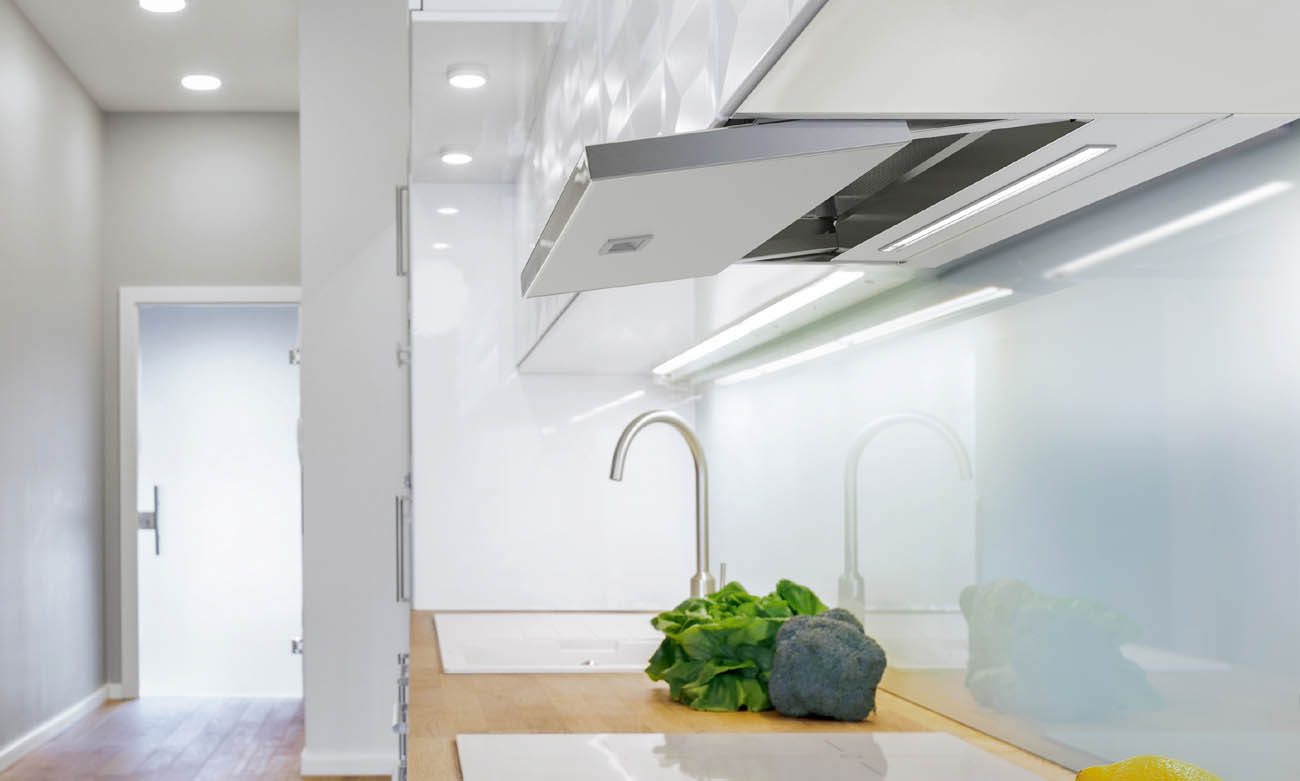
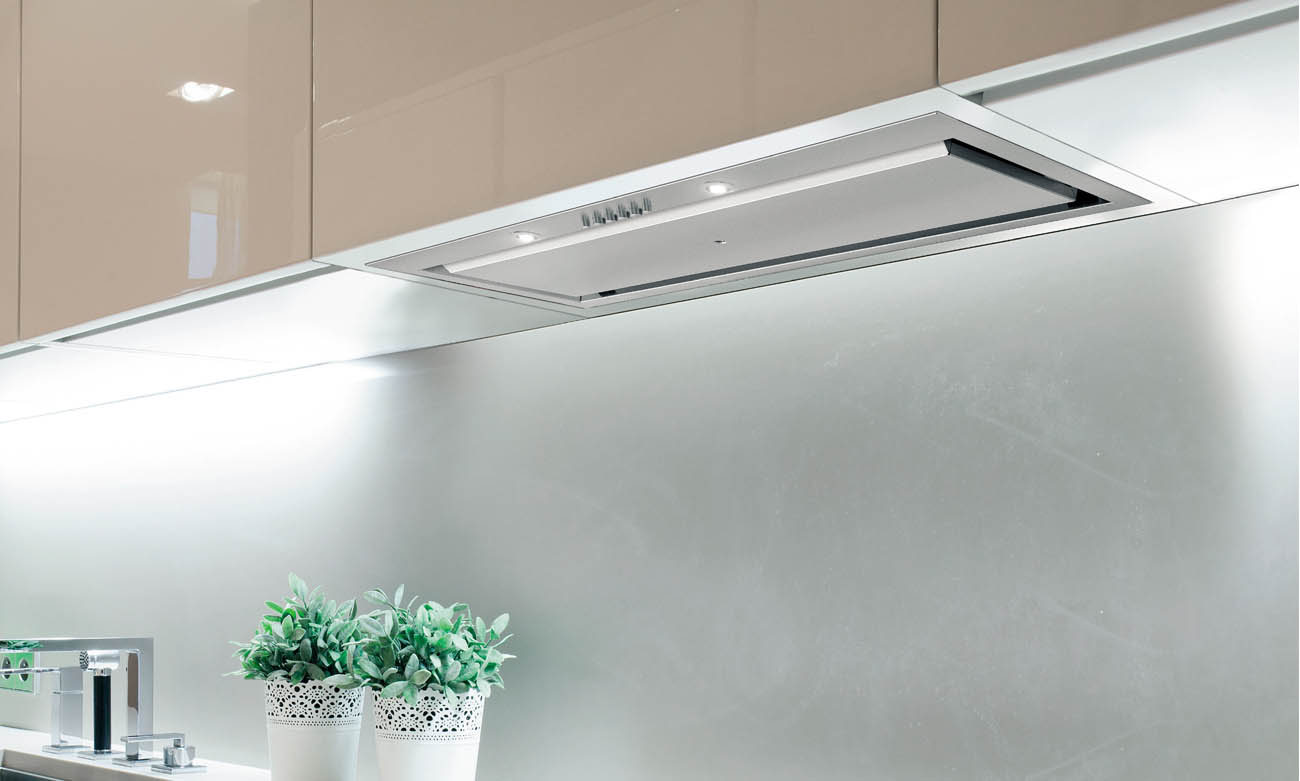
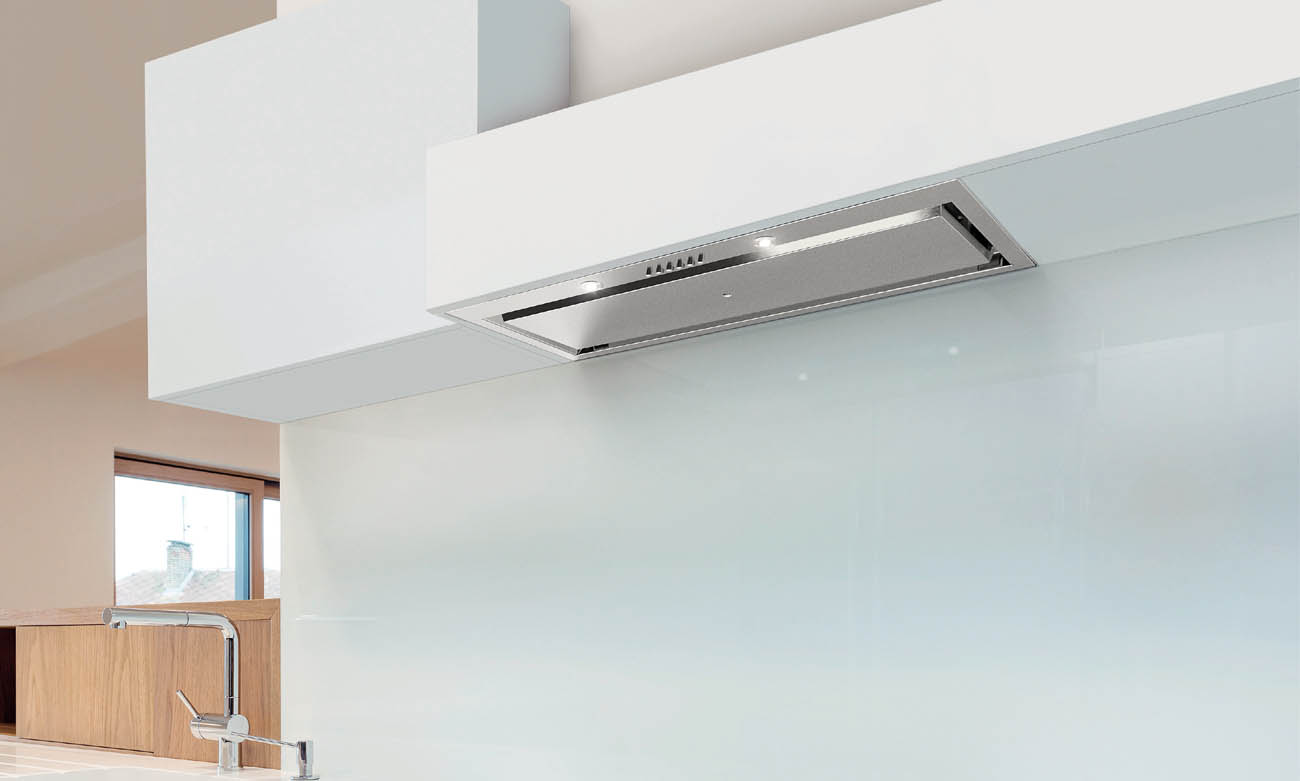
The Galvamet STOP Condensation technology is available on several models in the Galvamet range, designed to provide maximum comfort in induction kitchens.

Subscribe to the newsletter

Don’t miss any news about our products and our company, subscribe to our newsletter!